Third-party logistics (3PL) providers face a unique packaging challenge. Unlike manufacturers that ship similar products every day, 3PL warehouses often handle thousands of different stock keeping units (SKUs), ranging from lightweight cosmetics and consumer electronics to fragile glassware, wine bottles, and household products.
Because product sizes, weights, and shipping requirements change constantly, one protective packaging method rarely fits every order. Warehouse managers need packaging equipment that is flexible, efficient, and easy for operators to use while maintaining consistent protection across different product categories.
This is where a paper cushioning machine for warehouse operations becomes an important investment. Modern paper systems can perform several packaging functions—from filling empty carton space to absorbing impact and securing heavy products during transportation. Industry suppliers classify paper protective packaging into three primary functions: Void Fill, Cushioning, and Block-and-Brace, helping businesses match packaging performance to product requirements rather than relying on a single solution.
Understanding these functions is the first step toward selecting the right equipment for a growing warehouse or fulfillment center.
Why 3PL Warehouses Need Different Paper Packaging Systems
Unlike single-product manufacturers, 3PL providers must package products with very different characteristics every day.
A typical warehouse may process:
Some products only require lightweight paper void fill to prevent movement inside the carton, while heavier or fragile items need stronger cushioning or rigid blocking.
Instead of purchasing multiple unrelated systems, many warehouses build flexible workstations that can perform several protective packaging functions using compatible paper equipment.
This approach improves productivity while reducing operator training and simplifying material management.
Understanding the Three Main Packaging Functions
Choosing the correct paper packaging system begins with understanding what each packaging function is designed to achieve.
Void Fill
Void fill is used to occupy empty space inside a shipping carton.
Its primary purpose is preventing products from shifting during transportation.
Typical applications include:
Small e-commerce parcels
Cosmetics
Fashion accessories
Consumer goods
Box assortments
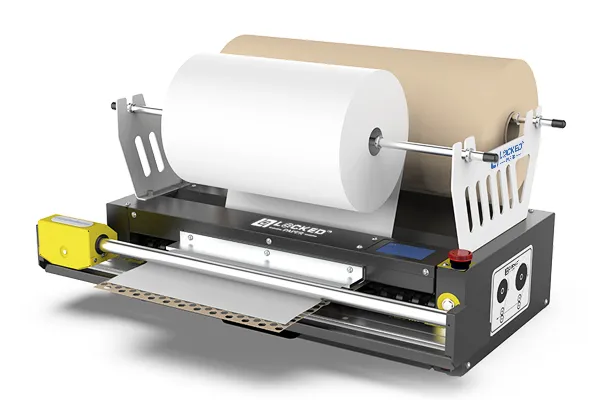
A paper void fill machine converts paper into lightweight protective material that fills unused space quickly and efficiently.
These systems are particularly suitable for warehouses with moderate order volumes or multiple packing stations that require simple, reliable operation.
Cushioning
Cushioning is designed to absorb impact rather than simply filling empty space.
Instead of preventing movement alone, cushioning reduces shock transmitted to fragile products during transportation.
Products commonly requiring cushioning include:
Electronics
Glassware
Wine bottles
Perfumes
Premium cosmetics
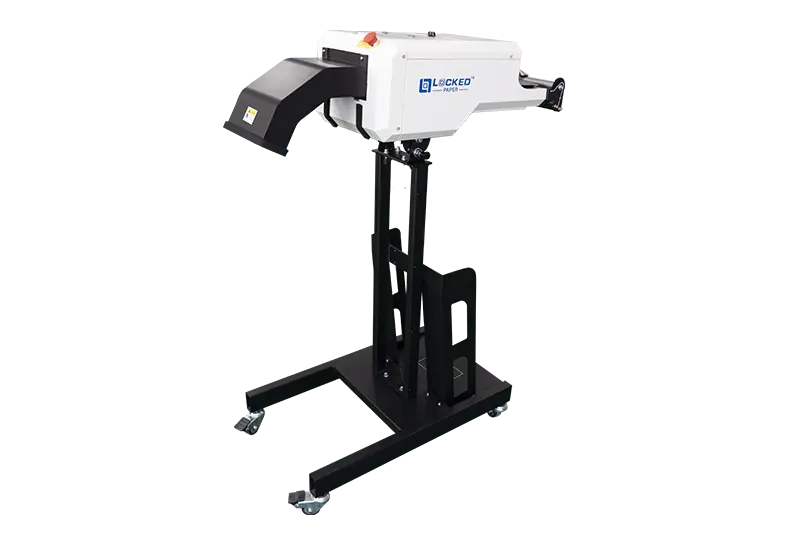
A paper padding machine transforms paper into thicker protective pads capable of absorbing impact while maintaining package stability.
Compared with lightweight void fill paper, cushioning materials generally provide greater compression resistance and energy absorption.
For warehouses handling valuable or fragile products, dedicated cushioning equipment often reduces shipping damage and customer returns.
Block-and-Brace Packaging
Some products require more than cushioning.
Heavy or irregularly shaped products may continue moving inside cartons unless securely fixed in position.
This is where block and brace packaging becomes important.
Instead of surrounding the product with soft material, block-and-brace systems create structural supports that limit movement throughout transportation.
Typical applications include:
A high-density paper cushion produced by an industrial packing paper machine can provide excellent stability while remaining easy to handle during packing operations.
For products shipped internationally or through multiple handling stages, block-and-brace packaging often provides greater protection than simple void filling.
Choosing Between Manual and Automated Equipment
Not every warehouse requires the same level of automation.
Small fulfillment centers processing limited daily orders may find a manual paper void fill system sufficient.
Manual equipment offers several advantages:
As order volumes increase, however, automated equipment becomes increasingly attractive.
A modern paper packaging machine can produce protective paper continuously, improving consistency while reducing repetitive manual work.
Automated systems are particularly suitable for:
Large e-commerce warehouses
National distribution centers
3PL fulfillment providers
Multi-shift operations
For businesses experiencing seasonal demand spikes, automated production also helps maintain packing speed during peak periods.
Comparing Paper and Hybrid Protective Packaging
Although this article focuses on paper systems, many warehouses benefit from combining paper and air-based solutions.
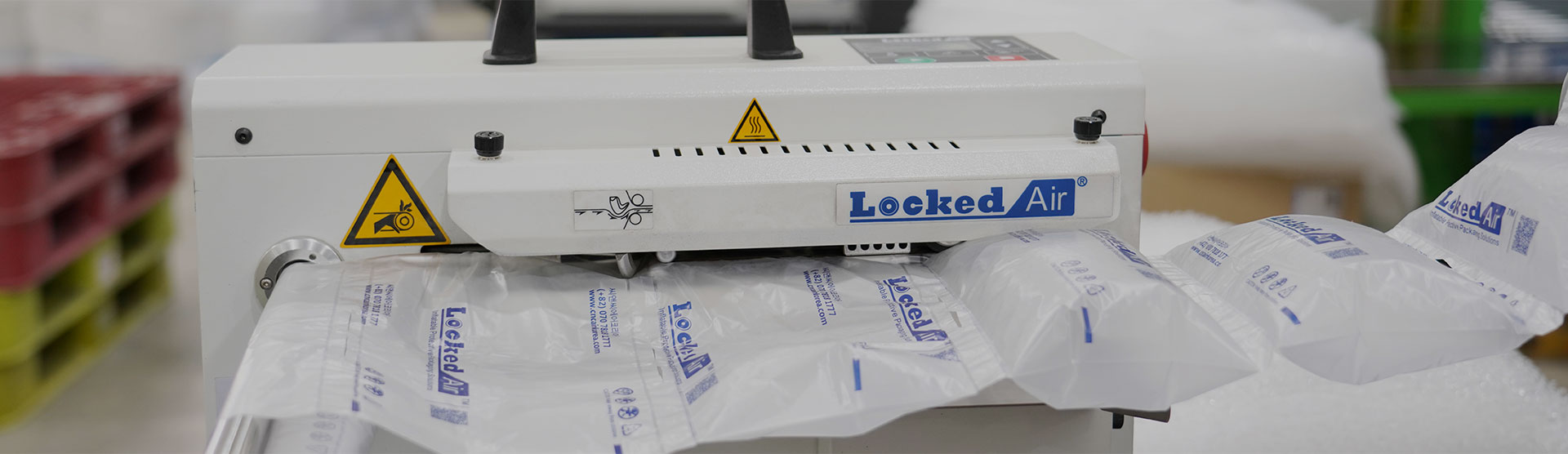
For example, lightweight consumer goods may be efficiently protected using void fill air bags, while heavier products benefit from paper cushion packaging.
Instead of replacing one technology with another, warehouse managers should evaluate:
Product weight
Fragility
Carton size
Packing speed
Shipping distance
Customer expectations
Selecting the appropriate packaging function for each product often delivers better operational results than standardizing every shipment around a single material.
Likewise, specialty materials such as honeycomb void filler may be appropriate for premium presentation or specific product categories, while conventional paper fill packaging provides efficient protection for everyday shipping operations.
Equipment Selection Matrix for 3PL Warehouses
One of the biggest challenges for a 3PL warehouse is choosing packaging equipment that matches different order profiles. Instead of selecting machines based only on packaging material, warehouse managers should evaluate order structure, product weight, packaging action, and expected throughput.
The following matrix can serve as a practical starting point.
Order Structure | Product Weight | Primary Packaging Action | Recommended LockedPaper Equipment |
Small e-commerce parcels | Light | Fill empty carton space | LP-VM1 Manual Kraft Paper Dispenser |
Mixed retail orders | Light–Medium | Void fill with moderate protection | LP-V1 Paper Void-Fill & Light Load Blocking System |
Medium-volume fulfillment | Light–Medium | High-speed void fill | LP-V3 Paper Void-Fill System |
Electronics & cosmetics | Medium | Cushion against impacts | LP-C1 Narrow Paper Cushion Pad System |
Wine, glassware & ceramics | Medium–Heavy | Cushion and stabilize fragile products | LP-C2 Wide Paper Cushion Pad System |
Industrial parts & machinery | Heavy | Block-and-brace packaging | LP-HA MC/AC Paper Wrap & Light Load Blocking System or LP-H1 Paper Wrap & Light Load Blocking System |
This comparison shows that no single machine is ideal for every application. The most effective solution depends on the warehouse's order mix rather than daily shipment volume alone.
Optimizing Warehouse Workflow
Choosing the correct equipment is only one part of an efficient packaging operation. The location of each machine within the warehouse also influences productivity.
For example:
Place manual paper void fill equipment near packing benches handling small parcels.
Install automated paper systems beside high-volume shipping lanes.
Reserve high-density cushioning equipment for fragile or heavy-product stations.
Position paper supplies where operators can replenish materials quickly without interrupting workflow.
A well-designed packaging area minimizes unnecessary walking, reduces operator fatigue, and improves consistency throughout the fulfillment process.
As warehouses continue adopting automation, many businesses integrate paper packaging equipment with conveyors, barcode scanners, weighing systems, and shipping software to streamline end-of-line operations. These integrated workflows help improve throughput while reducing manual handling and packaging errors.
Choosing the Right Solution for Different Industries
Different industries often require different paper packaging strategies.
E-commerce
Fast-moving online retailers typically prioritize quick packing and efficient paper void fill packaging to keep products stable during transportation.
Electronics
Electronic devices require cushioning capable of absorbing impacts while preventing movement inside the carton.
Wine and Spirits
Glass bottles require both cushioning and structural support to reduce breakage during long-distance shipping.
Cosmetics and Fragrances
Premium products often combine presentation with protection. Paper-based cushioning offers a clean appearance while protecting delicate containers.
Industrial Components
Heavy products frequently benefit from block and brace packaging, which minimizes movement and distributes load more effectively during transport.
Flexible Packaging Solutions from Locked Air
As part of the Locked Air packaging portfolio, LockedPaper provides paper-based protective packaging solutions designed for modern warehouses, manufacturers, distributors, and 3PL fulfillment centers.
Because every warehouse processes different products, LockedPaper systems are designed to adapt to changing order profiles rather than focusing on a single packaging application.
For businesses handling a broad mix of consumer goods, electronics, cosmetics, wine, or fragile household products, combining flexible equipment with the appropriate paper consumables can improve both operational efficiency and product protection.
Companies with more diverse shipping requirements may also combine paper systems with inflatable protective packaging from the Locked Air product range, allowing each product category to use the packaging method best suited to its protection needs.
Selecting Equipment for Long-Term Growth
When investing in a paper cushioning machine for warehouse operations, businesses should consider more than today's shipping requirements.
Key planning questions include:
How many orders are packed each day?
How often does the product mix change?
What percentage of shipments require cushioning instead of simple void fill?
Is warehouse automation planned within the next few years?
Will additional packing stations be added?
How much storage space is available for packaging materials?
Answering these questions helps ensure that today's investment remains suitable as order volumes and customer requirements continue to grow.
Conclusion
Choosing the right paper cushioning machine for warehouse operations requires understanding how different packaging functions support different products. Void fill, cushioning, and block and brace packaging each solve different transportation challenges, and selecting the appropriate solution depends on product weight, fragility, and shipping conditions rather than relying on one packaging method for every order. For 3PL providers managing diverse product portfolios, flexible paper packaging equipment improves efficiency while maintaining reliable protection. By evaluating order structure, packaging actions, and future warehouse expansion, businesses can build scalable 3PL packaging solutions that support productivity, reduce product damage, and adapt to changing fulfillment requirements.

 中文
中文