As Extended Producer Responsibility (EPR) packaging fees become a reality across Europe and other global markets, packaging is no longer just a protective layer around products. It has become a significant cost factor that directly affects profitability, sustainability goals, and supply chain efficiency.
For manufacturers, e-commerce brands, and distributors, learning how to reduce EPR fees starts with understanding how packaging choices influence compliance costs. Material selection matters, but so do packaging weight, recyclability, composite structures, and even the amount of empty space inside every shipping carton.
Rather than assuming that paper is always better than plastic, modern packaging strategies require balancing protection, performance, and environmental impact. Businesses that optimize packaging design often discover they can reduce costs while improving customer experience.
Understanding How EPR Packaging Fees Work
Extended Producer Responsibility shifts the financial responsibility for managing packaging waste from local governments to the companies placing packaging on the market.
Many EPR systems now consider multiple factors, including:
Packaging material category
Total packaging weight
Packaging recyclability assessment
Use of composite or difficult-to-separate materials
Packaging efficiency and unnecessary material usage
The UK is among the first countries implementing eco-modulated fees, where packaging that is easier to recycle may incur lower charges than packaging with poor recyclability.
For official guidance, businesses should refer to the UK government's EPR framework.
This means packaging engineers must think beyond product protection—they must also consider lifecycle performance.
1. Packaging Material Category Matters
Material selection is usually the first consideration when attempting to reduce EPR fees.
Different materials often enter different recycling streams:
Corrugated paper
Paper cushioning
PE air cushions
Bubble films
Compostable materials
Multi-material laminates
However, choosing paper over plastic does not automatically lower costs.
For example:
A lightweight recyclable air cushion may use significantly less raw material than a heavy paper alternative while still providing equivalent protection.
Likewise, certain paper products may contain coatings or laminates that reduce recyclability.
The best solution depends on:
Companies should evaluate the complete packaging system instead of making decisions based solely on material type.
.webp "DSC02068(1).webp")
2. Packaging Weight Directly Influences EPR Costs
Many EPR schemes calculate fees partly according to packaging weight.
Reducing unnecessary grams across thousands—or millions—of shipments can generate substantial annual savings.
Packaging designers should evaluate:
Oversized cartons
Excessive filler material
Heavy corrugated structures
Multiple secondary packaging layers
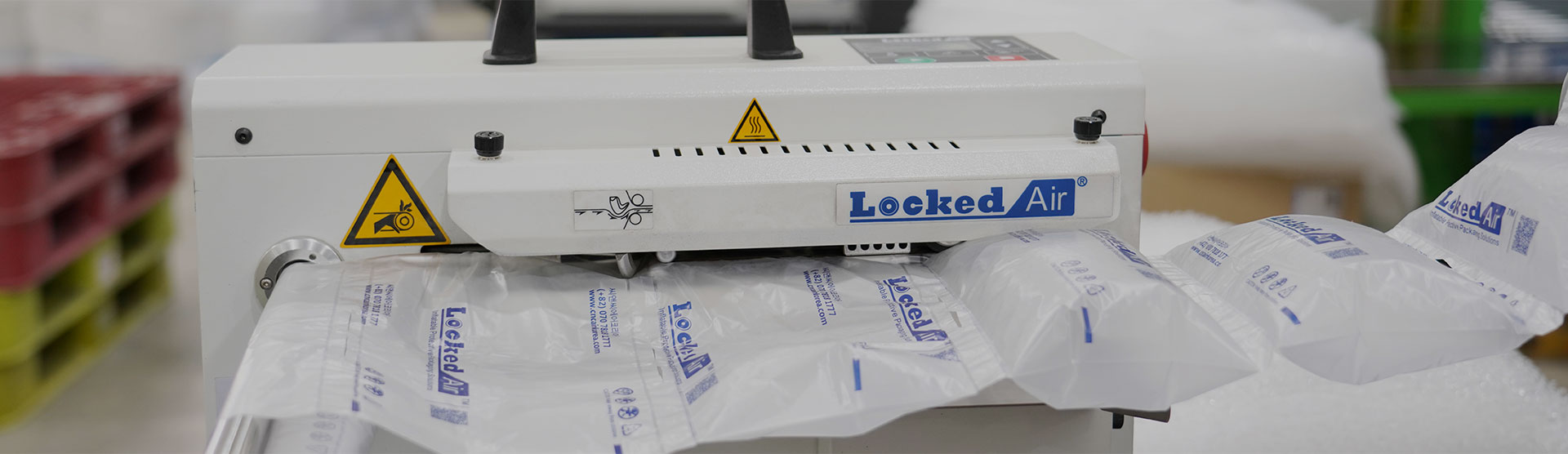
Modern void fill systems help reduce packaging weight while maintaining product protection.
For example:
Air cushions produced using a lightweight paper packaging system or inflatable protective packaging often require significantly less material than traditional loose-fill solutions.
Meanwhile, optimized honeycomb paper packaging cushioning wrap creates protective cushioning using only the paper required for each package.
Packaging automation also improves consistency by reducing operator overuse of materials.
3. Recyclability Is Becoming Increasingly Important
The UK's move toward eco-modulated fees demonstrates a growing emphasis on packaging recyclability assessment.
Packaging that can easily enter existing recycling streams may receive more favorable treatment than difficult-to-process alternatives.
Factors affecting recyclability include:
Mono-material construction
Easily separable components
Minimal contamination
Compatible adhesives
Clear recycling instructions
For shipping cartons, paper-based sealing systems can improve recyclability when properly selected.
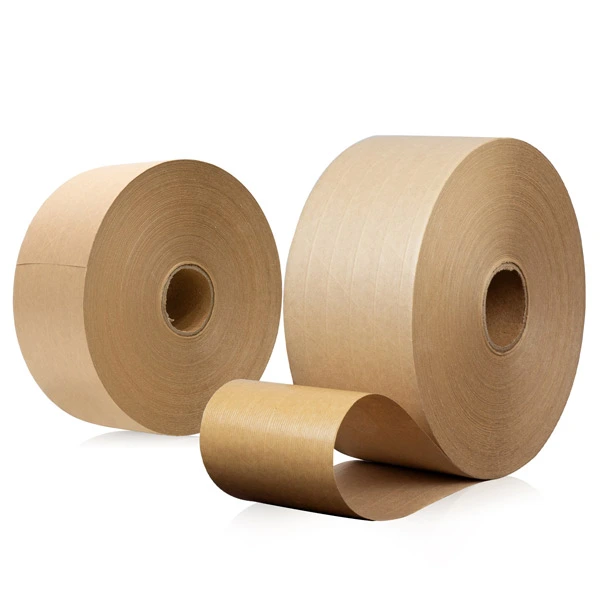
For example, water activated gummed paper tape bonds directly with corrugated boxes and is commonly recycled together with the carton.
These tapes provide strong carton sealing while supporting recyclable packaging systems.
Businesses sourcing from experienced water activated tape manufacturers can also select reinforced or standard grades based on shipment requirements.
4. Composite Packaging Can Increase Compliance Complexity
Many modern protective packaging solutions combine several materials.
Examples include:
Composite packaging often presents greater recycling challenges because materials must be separated before processing.
As EPR regulations evolve, complex packaging structures may face higher administrative burdens or less favorable recyclability classifications.
Packaging designers should ask:
Can materials be separated easily?
Is every layer necessary?
Can equivalent protection be achieved with simpler construction?
Simplifying packaging often reduces waste management costs while improving operational efficiency.
5. Empty Space Is More Expensive Than Many Companies Realize
One of the easiest opportunities to reduce EPR fees lies in minimizing unused carton space.
Oversized cartons require:
Selecting the correct packaging dimensions significantly reduces both packaging consumption and logistics expenses.
When void filling is necessary, companies can choose between automated and manual solutions depending on shipping volume.
These solutions provide flexible protection for lower-volume operations without requiring large automation investments.
For growing fulfillment centers, automated paper padding machines improve productivity while maintaining consistent cushioning performance.
Paper vs Air Cushioning: It's Not Always Either-Or
Rather than viewing paper and plastic as competitors, many businesses use both strategically.
Application | Paper Cushioning | Air Cushioning |
Heavy products | Excellent | Moderate |
Fragile electronics | Good | Excellent |
Cosmetics | Excellent | Excellent |
Wine bottles | Excellent | Excellent with custom air columns |
Void filling | Excellent | Excellent |
Shipping weight | Higher | Lower |
Material usage | Moderate | Very low |
Modern air cushioning & voidfill systems are particularly effective when reducing shipment weight is a priority.
Meanwhile, paper cushioning excels where premium presentation, rigidity, or paper-based recycling streams are preferred.
Many companies operate both systems to optimize packaging across different product categories.
Matching Packaging Systems to Different Industries
Different products require different protective strategies.
E-commerce
Fast-moving fulfillment centers benefit from flexible packaging systems that can quickly switch between product sizes while minimizing material waste.
Wine and Spirits
Glass bottles often require customized protection.
Inflatable air column packaging or engineered paper cushioning can both provide excellent shock absorption depending on logistics requirements.
Electronics
Electronic products require lightweight cushioning combined with impact protection.
Optimized Eco friendly paper bubble wrap and inflatable packaging systems can both meet these needs depending on product geometry.
Cosmetics and Skincare
Premium presentation matters.
Paper cushioning creates an upscale unboxing experience, while lightweight air cushions reduce shipping costs for direct-to-consumer deliveries.
Distributors
Distributors serving multiple industries benefit from offering both paper and air solutions to accommodate diverse customer requirements.
Custom branded consumables—including printed cushioning materials and tape—can also help strengthen customer branding throughout the supply chain.
Automation Helps Improve Packaging Consistency
Even well-designed packaging can become inefficient if operators use excessive material.
Packaging automation provides several advantages:
Solutions such as paper padding machines and inflatable packaging equipment allow businesses to scale efficiently while maintaining packaging performance.
Building an EPR-Friendly Packaging Strategy
Reducing EPR costs should not focus on replacing every plastic component with paper or vice versa.
Instead, companies should evaluate packaging using five key questions:
1. Is the material appropriate for the product?
2. Is the packaging heavier than necessary?
3. Can the packaging be easily recycled?
4. Can complex composite structures be simplified?
5. Is unnecessary empty space being eliminated?
Answering these questions often reveals opportunities to improve both sustainability and operational efficiency.
Companies that combine optimized packaging design with suitable machinery and protective materials can often reduce waste, improve customer satisfaction, and prepare for future regulatory changes.
For businesses seeking flexible protective packaging solutions, exploring sustainable materials, automated paper packaging systems, and advanced air cushioning technologies can help create packaging strategies that balance protection, compliance, and long-term cost control.
Conclusion
As EPR regulations continue to evolve, packaging design has become a strategic business decision rather than simply a logistics requirement. Packaging weight, recyclability, material selection, composite construction, and empty space all influence total compliance costs. Rather than assuming one material is universally superior, businesses should choose protective packaging based on product requirements, recycling performance, and operational efficiency. By combining right-sized packaging with appropriate cushioning systems, sealing solutions, and automation, companies can better manage EPR packaging fees, improve sustainability performance, and stay prepared for increasingly eco-modulated packaging regulations.

 中文
中文