Electronic products are among the most valuable and sensitive items shipped through today's global supply chains. From smartphones and tablets to industrial control boards, sensors, medical devices, and consumer electronics, even minor transportation damage can result in costly returns, warranty claims, or customer dissatisfaction.
Unlike many other products, electronics face multiple risks during storage and transportation. A package may survive an impact but still suffer invisible damage caused by electrostatic discharge (ESD), continuous vibration, or excessive temperature changes. Displays can be scratched, connectors bent, and delicate circuit boards permanently damaged before the package even reaches the customer.
For manufacturers, distributors, e-commerce sellers, and contract packaging providers, selecting the right electronics protective packaging requires understanding these risks and matching them with suitable protective materials.
Modern packaging systems—including electronic components air column bags, inflatable air pillows, paper cushioning materials, and anti-static packaging—provide different levels of protection depending on product characteristics and logistics conditions.

Why Electronics Require Specialized Protective Packaging
Electronic devices combine fragile mechanical structures with sensitive electronic components.
Typical products include:
These products may be damaged by forces that leave little or no visible evidence on the outside of the package.
An effective packaging for electronic products should therefore protect against:
Instead of relying on one protective material, many manufacturers combine inflatable cushioning, paper protection, and anti-static materials to create a complete packaging solution.
Electronics Transportation Risk Matrix
The table below summarizes the most common transportation risks for electronic products.
Transportation Risk | Typical Damage | Recommended Packaging |
Shock | Broken housings, cracked components | Electronic components air column bag |
Continuous vibration | Loose connectors, internal movement | Inflatable air pillows or air filled plastic packaging |
Static electricity | Circuit board failure | Anti-static protective packaging |
Temperature change | Material expansion and condensation | Appropriate barrier materials |
Corner impact | Housing damage | Air column bag for electronics |
Surface abrasion | Scratched displays and panels | Paper bubble or black honeycomb paper |
Selecting packaging according to these risks helps reduce shipping damage while avoiding unnecessary material use.
Risk 1: Shock During Transportation
Shock remains one of the leading causes of damage to electronic products.
Parcels may experience drops during manual handling, conveyor transfers, or last-mile delivery. Concentrated impact forces can crack plastic housings, damage internal assemblies, or break fragile displays.
An electronic components air column bag surrounds the product with multiple independent air chambers. These chambers absorb and distribute impact energy, reducing the force transmitted directly to the device.
Compared with conventional loose-fill materials, air column packaging electronics solutions provide more consistent protection while using lightweight materials that reduce shipping weight.
Industry guidance also identifies shock protection as one of the primary considerations when selecting protective packaging for electronic products .
Risk 2: Continuous Vibration
Unlike a single drop, vibration applies thousands of small movements throughout transportation.
Long-distance truck transportation, air freight, and parcel sorting systems expose products to repeated vibration that may gradually loosen internal components.
Products especially vulnerable include:
An inflatable air packaging system helps stabilize products inside shipping cartons by limiting movement during transport.
Additional void filling bag materials may be used to eliminate empty space inside cartons, preventing products from repeatedly striking carton walls.
For larger electronic equipment, combining inflatable bags for packaging with properly sized cartons provides better stability than relying on void fill alone.
Risk 3: Electrostatic Discharge (ESD)
Mechanical protection alone cannot prevent all shipping damage.
Electrostatic discharge (ESD) is often invisible but can permanently damage integrated circuits, sensors, processors, and other sensitive electronic components.
This is particularly important when shipping:
Printed circuit boards
Computer components
Semiconductor devices
Communication equipment
In these applications, anti-static protective packaging should be used together with cushioning materials rather than as a replacement for them.
For example, an anti-static bag may protect against electrical discharge, while an air column bag for electronics provides shock absorption during transportation.
Industry packaging guidelines recommend combining ESD protection with appropriate cushioning systems to reduce both electrical and mechanical risks during distribution.
Risk 4: Temperature and Humidity Changes
Electronic products are also affected by changing environmental conditions during transportation and storage. High temperatures may soften certain plastics or adhesives, while low temperatures and humidity fluctuations can lead to condensation when products are moved between different climates.
Although protective packaging cannot control the shipping environment, it can help reduce direct exposure and keep products stable inside the carton. For international shipments, many manufacturers combine sealed packaging with moisture-control solutions and cushioning materials to minimize the effects of temperature changes.
Selecting packaging materials that match the shipping environment is particularly important for high-value electronics and precision components.
Risk 5: Corner and Edge Compression
Corners are often the first points to absorb impact when cartons are dropped. Electronic devices with aluminum frames, plastic housings, or exposed edges can suffer dents, cracks, or structural damage even when the outer carton appears intact.
An air column bag for electronics provides continuous cushioning around the product, helping distribute impact away from vulnerable corners. For larger devices, additional void filling bag materials can be added to reduce movement inside the shipping carton.
Proper carton sizing is equally important. Excessive empty space allows products to shift during transport, increasing the risk of corner impacts.
Risk 6: Screen and Surface Scratches
Many electronic products feature glossy displays, touchscreens, polished housings, or decorative finishes that are easily scratched during transportation.
Instead of relying only on inflatable protection, manufacturers often combine cushioning with paper-based wrapping materials.
These materials create a protective layer between the product and the carton while reducing friction between multiple items packed together. Paper-based wrapping also helps improve the unboxing experience for premium consumer electronics.
Comparing Protective Packaging Solutions
Different protective materials address different transportation risks. The following comparison provides a general selection guide.
Packaging Solution | Shock | Vibration | ESD Compatibility | Surface Protection | Typical Applications |
Electronic Components Air Column Bag | ★★★★★ | ★★★★☆ | Used with anti-static bags | ★★★★☆ | Consumer electronics, industrial devices |
Air Cushion Film / Inflatable Air Pillows | ★★★★☆ | ★★★★★ | Compatible | ★★★☆☆ | Void fill, larger products |
Paper Bubble | ★★★☆☆ | ★★★☆☆ | Compatible | ★★★★★ | Screens, polished surfaces |
Black Honeycomb Paper | ★★★☆☆ | ★★★☆☆ | Compatible | ★★★★★ | Premium electronics, gift packaging |
Anti-static Protective Packaging | ★★☆☆☆ | ★★☆☆☆ | ★★★★★ | ★★★☆☆ | PCBs, chips, electronic components |
Rather than choosing one material, many electronics manufacturers combine multiple solutions to achieve balanced protection throughout the shipping process.
LockedAir Electronics Packaging Solutions
LockedAir offers protective packaging solutions for manufacturers, distributors, and e-commerce businesses shipping electronic products.
The portfolio includes:
Electronic Components Air Column Bags for fragile devices
Air Cushion Film for on-demand cushioning and void filling
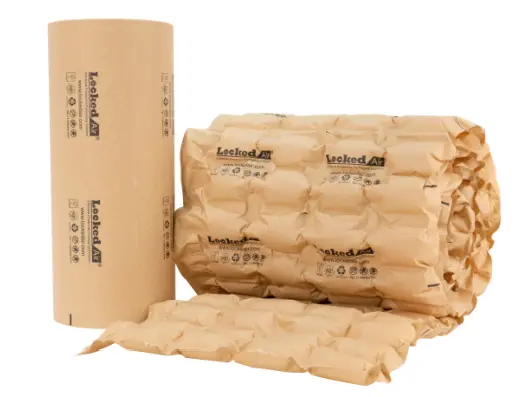
Paper Bubble for scratch protection
Black Honeycomb Paper for premium presentation and surface protection
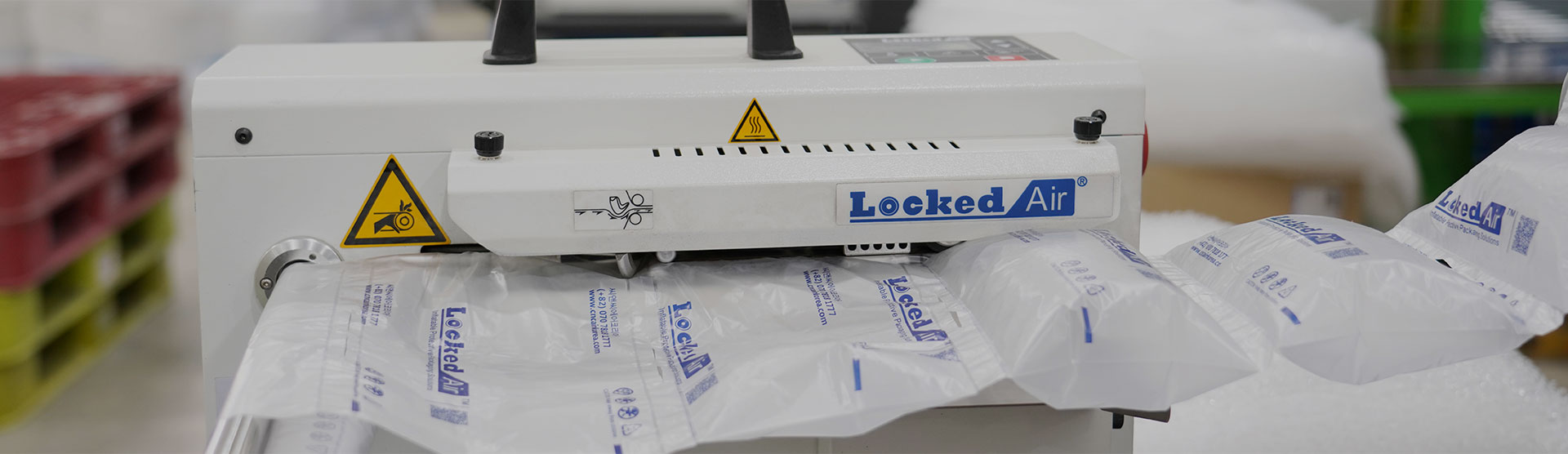
Inflatable Air Packaging Systems for efficient warehouse operations
Packaging materials can also be customized with different dimensions, material specifications, and printed logos to meet individual product requirements.
For businesses handling multiple product types, combining inflatable cushioning with paper-based protective materials provides both reliable protection and an improved customer experience.
Choosing the Right Electronics Packaging Strategy
Before selecting packaging for electronic products, businesses should evaluate:
An integrated packaging strategy that combines mechanical cushioning, anti-static protection, and surface protection is often more effective than relying on a single packaging material. Global Electronics Association recommends selecting packaging according to product sensitivity, transportation conditions, and handling requirements.
Conclusion
Effective electronics protective packaging must address multiple transportation risks, including shock, vibration, electrostatic discharge, temperature changes, corner impacts, and surface scratches. Electronic components air column bags provide excellent impact protection, while air cushion film stabilizes products during transit. Paper bubble and black honeycomb paper help protect sensitive surfaces, and anti-static materials safeguard electronic components from ESD. By selecting packaging according to product characteristics and shipping conditions, manufacturers and distributors can reduce damage, improve delivery reliability, and enhance customer satisfaction. LockedAir's combination of inflatable, paper-based, and customized protective packaging solutions enables businesses to build efficient packaging systems for today's electronics supply chains.

 中文
中文